
Advanced Ceramic Materials Overview
Advanced ceramics are ceramic materials that continuously incorporate new technologies and offer high performance. They are more efficient, more durable and less costly to maintain than traditional materials. Advanced ceramics are also known as technical ceramics or speciality ceramics. They have excellent properties such as high hardness, high temperature resistance, chemical resistance, high strength, insulation, electrical conductivity and machinability, and can be used in many fields such as structural ceramics, functional ceramics, bioceramics, optical ceramics, and so on. GW Ceramics offers a wide range of advanced technical ceramics to support your needs.

Alumina (Aluminum Oxide)
Alumina is a wear-resistant advanced ceramic material which is widely used in industrial and electronic applications.

Zirconia (Zirconium Oxide)
Zirconia ceramics are widely used in the field of structural ceramics due to their high toughness, high flexural strength and wear resistance.

Silicon Nitride
Silicon nitride ceramics offer an outstanding comprehensive performance.
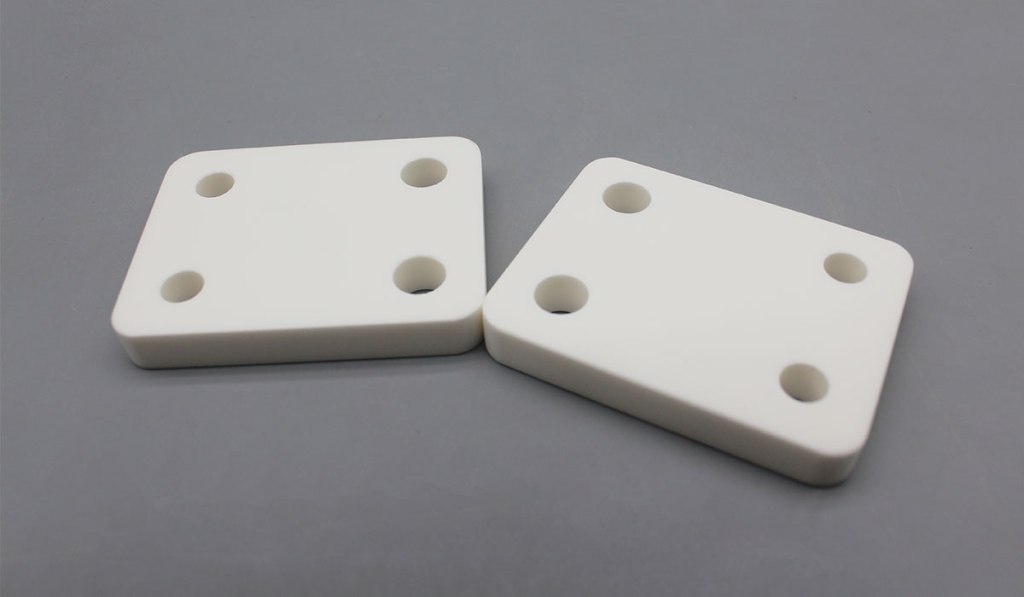
Aluminium Nitride
Aluminum nitride ceramic materials have excellent electrical insulation and thermal conductivity.
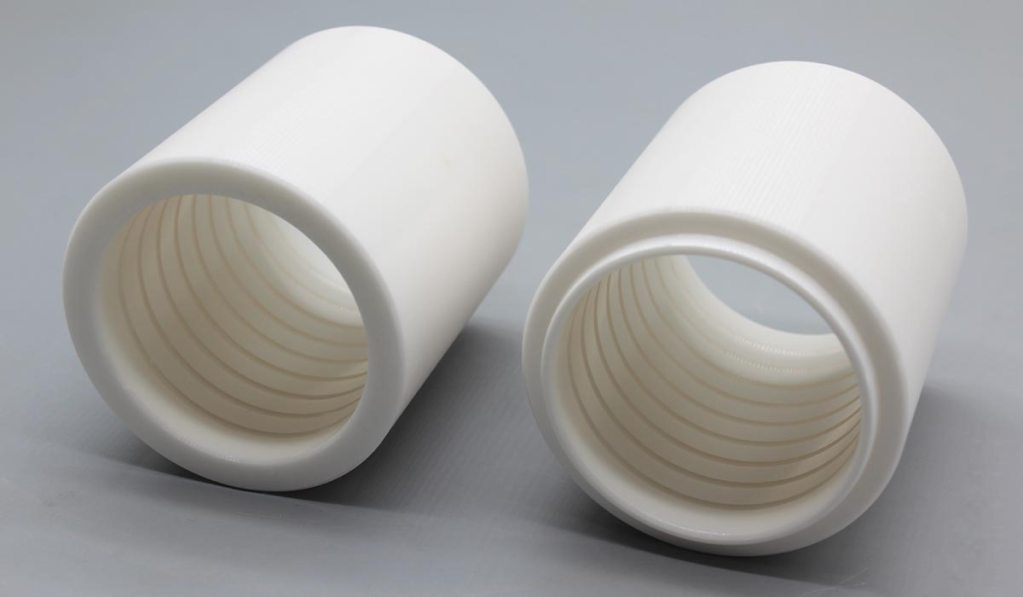
Aluminium Titanate
Aluminium titanate ceramic has a very low coefficient of thermal expansion.

Silicon Carbide
Silicon carbide ceramic materials are characterised by high strength, high hardness and light weight. It has a low coefficient of thermal expansion.
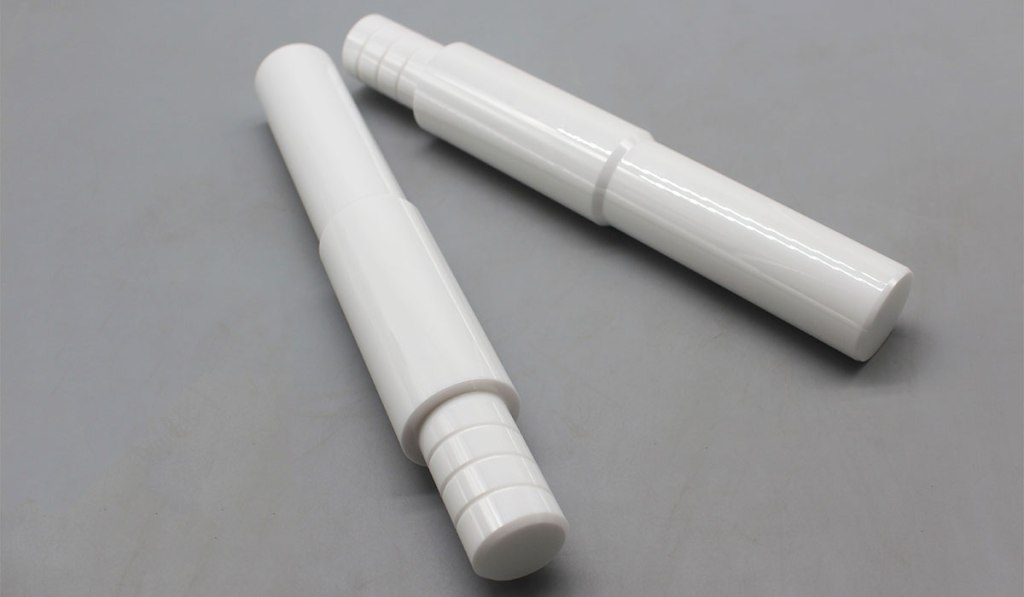
ZTA (Zirconia Toughened Alumina)
ZTA ceramic materials offer higher strength, higher fracture toughness and good economics.

Machinable Ceramics
Machinable ceramics are glass-ceramics that have the properties of advanced ceramics and are easy to machine.
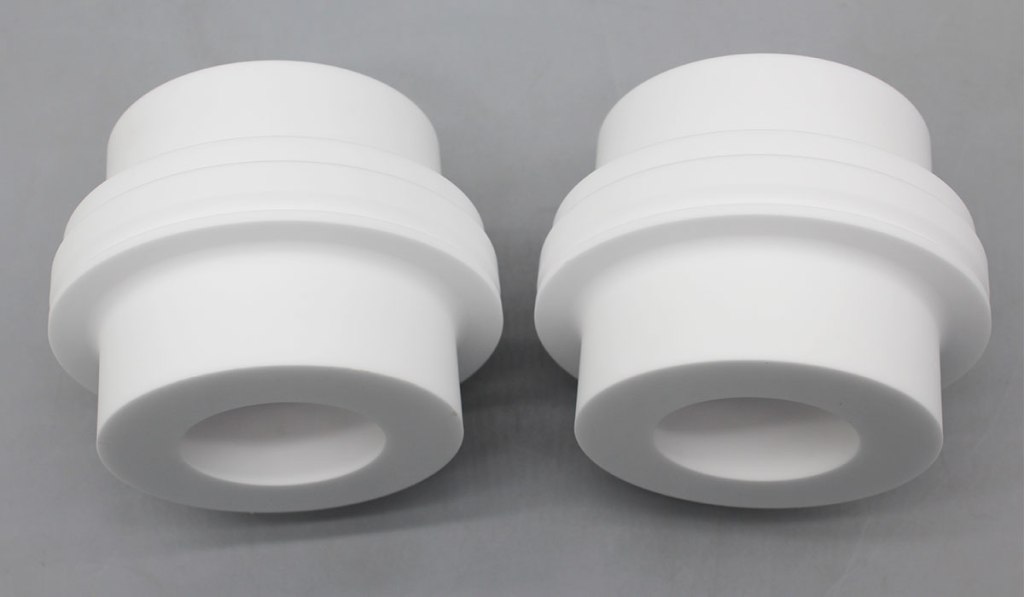
Boron Nitride
Boron nitride ceramic material is easy to process and has good thermal conductivity.
Advanced Ceramics Mechanical Properties Chart
| Colour | Density (g/cm³) | Mohs Hardness | Compressive Strength (Mpa) | Flexural Strength (Mpa) | Young’s modulus (GPa) | Fracture Toughness (MPa·m1/2) | Poisson’s Ratio | |
| 95% Alumina | white | 3.5-3.7 | 9 | >2000 | >255 | 320 | 3-4 | 0.23 |
| 97% Alumina | white | 3.6-3.73 | 9 | >2050 | >255 | 330 | 3-4 | 0.23 |
| 99% Alumina | light yellow | 3.75-3.9 | 9 | >2200 | >300 | 360 | 3-4 | 0.23 |
| 99.5% Alumina | light yellow | 3.8-3.9 | 9 | 2000-2600 | >330 | 370 | 4-5 | 0.23 |
| 99.8% Alumina | light yellow | 3.8-3.92 | 9 | 2000-2800 | >350 | 370 | 4-5 | 0.22 |
| Aluminium Titanate | white | 3.35-3.7 | 7-8 | 180-400 | 20-40 | 200-300 | 1.5-2.5 | 0.2-0.25 |
| Zirconia | white | 5.6-6.07 | 8.5 | >1700 | >700 | 205 | 3.5-10 | 0.3 |
| Silicon Nitride | black | 3-3.3 | 9-9.5 | ≥2500 | ≥600 | 300 | 5-8 | 0.25 |
| Aluminium Nitride | grey | 2.2-3.3 | 7-8 | 2500 | 350-450 | 310 | 3-6 | 0.24 |
| Boron Nitride | white | 1.9-2.2 | 2 | 100-300 | 30-150 | 50-75 | – | 0.15-0.21 |
| Silicon Carbide | black | 2.5-3.2 | 9.5 | 1500-2500 | 300-400 | >400 | 2-3 | 0.14-0.21 |
| 10% ZTA | white | 3.9-4.1 | 9 | 1800-2900 | 400-900 | 400 | 4-7 | – |
| Machinable Ceramics | white | 2.5-2.6 | 6.5 | 500 | 100 | 65 | – | – |
Advanced Ceramics Thermal Properties Chart
| Coefficient of Thermal Expansion (40-400°C) (× 10-6/℃) | Thermal Shock Resistance (℃) | Thermal Conductivity (W/m·K) | Maximum Operating Temperature (without load) (℃) | |
| 95% Alumina | 6.5 | 200 | 24 | 1450 |
| 97% Alumina | 7.1 | 200 | 25 | 1600 |
| 99% Alumina | 7.3 | 220 | 29 | 1650 |
| 99.5% Alumina | 8.3 | 220 | 32.3 | 1700 |
| 99.8% Alumina | 8.5 | 220 | 26 | 1700 |
| Aluminium Titanate | 0.5-1.5 | 400-800 | 0.85-1.5 | 1490 |
| Zirconia | 10.5 | 300 | 2-3 | 2100 |
| Silicon Nitride | 3 | >500 | 20 | 1400 |
| Aluminium Nitride | 4-6 | 300 | 20-230 | 1350 |
| Boron Nitride | 4.1 | – | 130 | 2800 |
| Silicon Carbide | 4 | 350 | 120-350 | 1300 |
| 10% ZTA | 8-9 | 225-500 | 17-27 | 1500 |
| Machinable Ceramics | 7.2 | – | 1.71 | 800 |
Advanced Ceramics Electrical Properties Chart
| Dielectric Constant (1MHz) | Dielectric Strength (kV/mm) | Volume Resistivity (25°C) (Ω·cm) | |
| 95% Alumina | 8.9-9.2 | 8-8.7 | >1014 |
| 97% Alumina | 9-9.2 | 8-9 | >1014 |
| 99% Alumina | 9-9.7 | 8-9 | >1014 |
| 99.5% Alumina | 9.7-9.9 | 8.7-9.4 | >1014 |
| 99.8% Alumina | 9.7-9.9 | 8.7-9.4 | >1016 |
| Aluminium Titanate | 14-18 | 10-20 | >1012 |
| Zirconia | 23-26 | 10-15 | >1012 |
| Silicon Nitride | 8-10 | 10 | >1014 |
| Aluminium Nitride | 8-9 | 15-17 | >1014 |
| Boron Nitride | 4 | 30-40 | >1013 |
| Silicon Carbide | 6.5-10 | – | 107-1014 |
| 10% ZTA | 8-9 | 9 | >1013 |
| Machinable Ceramics | 6-7 | >40 | >1016 |
*The data in the charts show the properties of the ceramic materials.
*The above figures do not represent any commitment to the customer’s product.
*Due to differences in production processes and product forms, the final property data for ceramics may vary.